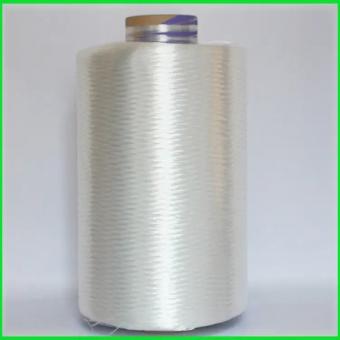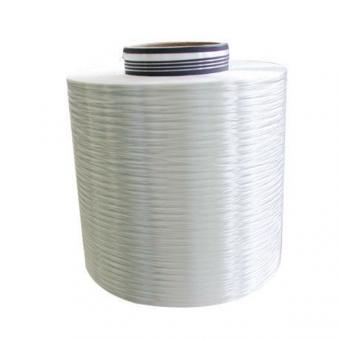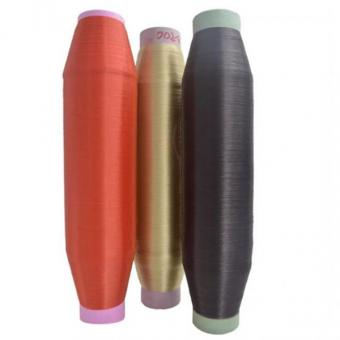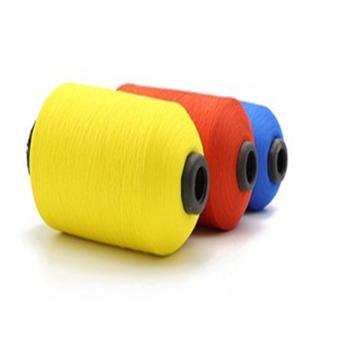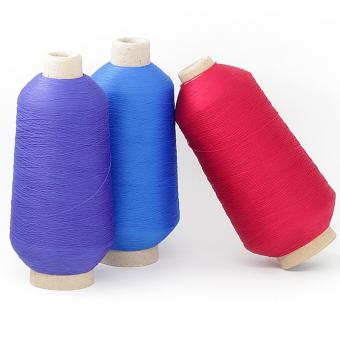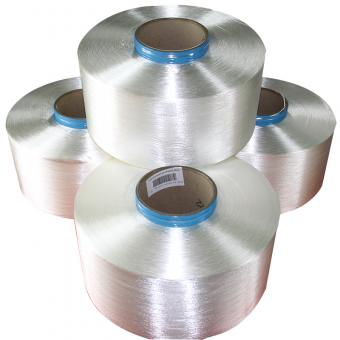
International oil prices are fluctuating at a high level, and polyester filament is facing upward pressure - it is recommended to stock up in advance. We will do our best to ensure supply, delivery time and quality.
Recently, the international crude oil market has once again entered a period of intense volatility. Affected by multiple factors such as the repeated regional conflicts in the Middle East, the continuation of OPEC+ production cuts, and the decline in US crude oil inventories, the Brent crude oil price reached over $110 per barrel in mid-May. Although it experienced a technical correction later, it is currently still stable in the high range of $105 - $108 per barrel. Many energy institutions predict that in the short term, geopolitical risks are unlikely to subside, and the oil price is likely to continue to maintain a high-level wide-range fluctuation pattern.
Crude oil is the starting point of the chemical fiber industry chain. An increase in oil prices will quickly be transmitted to every stage of the process, namely PX (para-xylene) → PTA (polarized terephthalic acid) → MEG (ethylene glycol) → polyester chips → polyester filament (POY/FDY/DTY).
Unlike demand-pull inflation, once cost-push inflation starts, it tends not to fall rapidly. As long as the price of crude oil does not drop significantly, the production cost of polyester filament will remain at a high level, and factories can only shift the pressure by continuously raising prices.
When the profits in the PTA and polyester production processes are compressed to a certain extent, some small and medium-sized factories will choose to cut costs or conduct maintenance. Historical data shows that when the oil price exceeds $100 per barrel and remains so for more than three weeks, the average industry operating rate may drop by 5% to 8%. The reduction in supply will further push up the spot prices, and even lead to a situation where there is value but no quantity.
Quality control experienced fluctuations due to the rush production.
Guarantee Dimension Specific Measures
Quality Stability:
① All products are made using high-quality polyester chips, and the production process strictly follows the ISO 9001:2025 quality management system;
② Each batch is tested for 12 key indicators such as breaking strength, elongation rate, oil content, and network degree before leaving the factory, and a quality inspection report can be provided with the goods;
Delivery Timeliness:
① We have completed 30-day safety raw material inventory preparation in advance, unaffected by short-term shortages of PTA/MEG;
② The production line operates at full capacity but not beyond capacity, and the production scheduling system automatically locks machines and times when receiving orders;
Logistics Efficiency:
① We have signed long-term agreements with 3 first-class freight forwarders and 2 dedicated fleets, enjoying priority booking rights and fixed transportation capacity;
② We can provide multiple options such as sea freight, railway, and land transportation, recommending the fastest and most stable route based on your destination port;③ From factory loading to export customs declaration, the entire process is tracked by dedicated personnel, and the logistics trajectory is updated daily.
3. Suggested Inventory Preparation Based on Current Market Conditions (Specifically Operable)
We do not encourage blind large-scale stockpiling, but we suggest that you, based on your own order cycle and safety inventory level, place orders in batches and strategically in advance:
Lock in the average usage quantities for the next 30-45 days.Based on your purchase records from the past two months, identify the 3-5 specifications with the highest purchase volumes (such as POY 150D/48F, FDY 75D/36F, etc.).
For these specifications, it is recommended to place a one-time order to cover the planned usage for the next 30-45 days. This way, even if the prices rise in the future, the cost for this part will be locked in.
Focus on products with strict delivery time requirements
If you have ongoing export orders (especially those with strict L/C delivery deadlines or orders where air freight is changed to sea freight), it is recommended to place orders for the required chemical fiber raw materials first, and mark them as "urgent orders". We will mark them as priority production to ensure that there will be no delay in the delivery of your final products due to raw material shortages.
4. Risk Warning: It is not recommended to "wait and see"
In early June, OPEC+ will hold a production meeting, and it is highly likely to maintain the current production cut policy.
5. Take immediate action and lock in the current price and delivery date
Quotation method: You can directly send the required specifications, quantity and destination port via WhatsApp, WeChat or email. We will provide the formal PI (invoice in form) within 2 hours.
Free samples: For the first-time cooperation specifications, we can offer a 1-kilogram sample for free.
The shipping cost is to be paid by the customer. This sample is provided for your testing and confirmation of the bulk order.





 IPv6 network supported